
Amnova Biotech: the startup developing a bioactive hydrogel to repair damaged heart tissue
- Amnova Biotech
- 27 abr
- 2 min de lectura
Behind this development is the support of CITES (Center for Technological, Business, and Social Innovation), the venture capital fund of the Sancor Seguros Group that specializes in deep tech and supports scientific startups with global potential from their earliest stages, providing capital, infrastructure, and a network of experts.
Article published in 100 seguro, April 8, 2026. Read it in Spanish.

Behind this development is the initiative of CITES (Center for Technological, Business, and Social Innovation), the venture capital fund of the Sancor Seguros Group that specializes in deep tech and supports scientific startups with global potential from their earliest stages, providing capital, infrastructure, and a network of experts.
In the context of Science and Technology Day (April 10), scientific development is once again positioning itself as a key driver for addressing some of the greatest global health challenges. One of these is heart failure, the leading cause of morbidity and mortality worldwide, affecting more than 64 million people, according to the World Heart Federation.
Despite medical advances, current treatment options—such as drug therapies, angioplasties, bypass surgeries, or even transplants—fail to reverse damage to the heart muscle. As a result, millions of patients live with irreversible loss of heart function, which directly impacts their quality of life and generates high costs for healthcare systems.
In this context, biotechnology is emerging as a promising avenue for changing the paradigm. One of the startups working in this direction is Amnova Biotech, part of the portfolio of CITES (the venture capital fund of the Sancor Seguros Group), which is developing an innovative solution focused on cardiac regeneration.
Their proposal is based on a bioactive injectable hydrogel inspired by the properties of human birth tissue. This cell-free technology is designed to recreate key biological signals that promote regenerative processes. When applied directly to the damaged heart, the hydrogel aims to improve the cardiac microenvironment by promoting vascularization, modulating inflammation, and stimulating tissue repair.
The preclinical results obtained so far are encouraging. In animal models of myocardial infarction, including studies in sheep, the technology demonstrated significant improvements in cardiac function, a reduction in infarct size, and an increase in both new blood vessel formation and cardiac cell proliferation, just 28 days after treatment.
Such developments reflect the enormous potential of applied science to transform medicine as we know it, moving from palliative treatments to solutions that aim to regenerate tissues and restore function.
Within this ecosystem, CITES has established itself as a strategic player by supporting scientific startups from their earliest stages, taking risks where others have not yet ventured. Since its founding in 2013, it has invested in 23 companies, mentored more than 174 startups, and mobilized over USD 24 million in private investment for the creation of new science and technology companies. With a model that integrates capital, R&D infrastructure, and a network of experts, CITES drives innovation while building companies capable of scaling globally, accelerating the transformation of scientific knowledge into concrete solutions that improve health and quality of life.
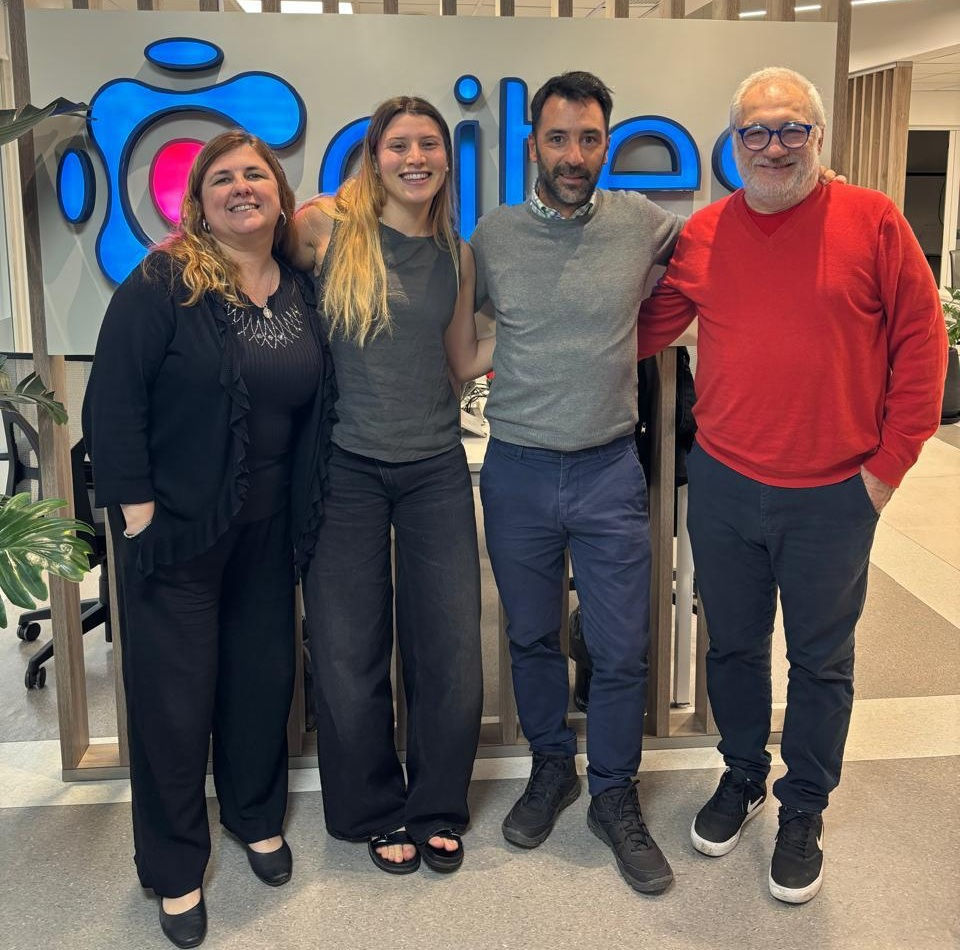


Gracias Pilar por formar parte de un proyecto que enfoca una mejora en la salud de millones de personas afectadas por infartos. Lo mejor para el desarrollo del plan. Abrazo al Equipo.
Quedo a disposicion para lo que pueda ser una ayuda en el camino al exito.